

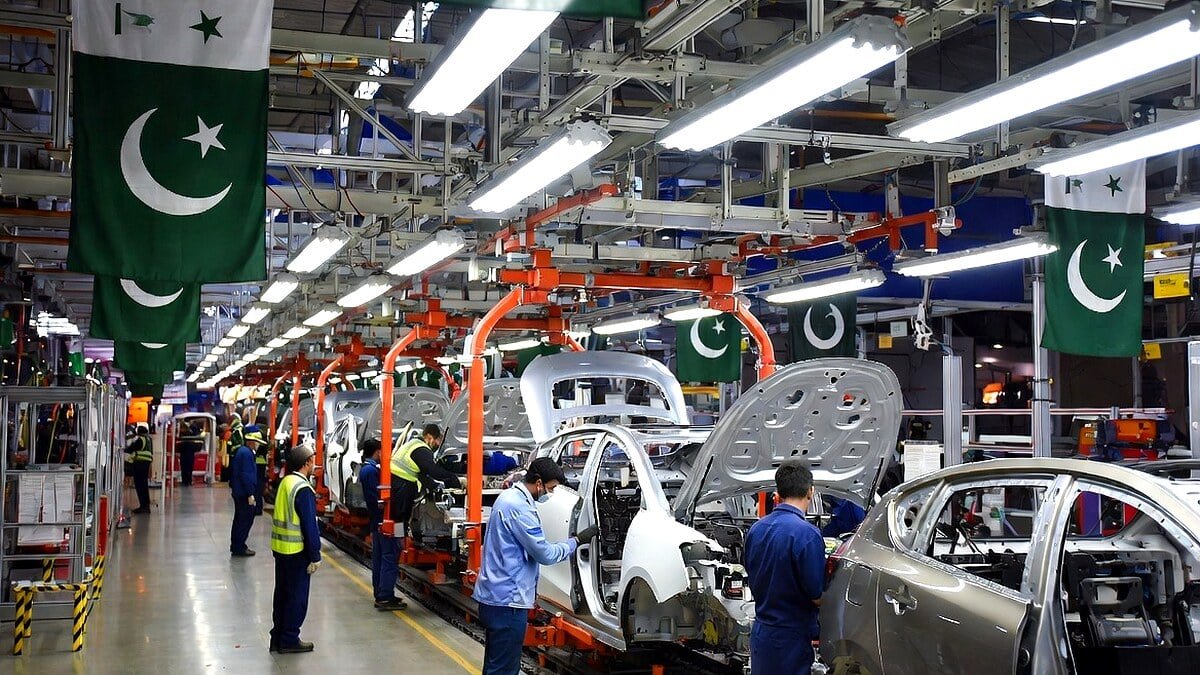
ISLAMABAD: Pakistan’s proposed Auto Policy 2026–31 is still awaiting final approval, with the government preparing to send the latest draft to the International Monetary Fund (IMF) for another review before moving ahead with its implementation.
Officials from the Ministry of Industries and Production informed the Senate Standing Committee on Industries and Production that the revised policy would first be forwarded to the Finance Ministry, which would subsequently share it with the IMF.
The development means that proposed changes to vehicle import duties, taxes, local manufacturing requirements and electric vehicle incentives have not yet become government policy.
The proposed Auto and Auto Parts Manufacturing Policy 2026–31 has undergone several rounds of consultations and revisions. Its key objectives include restructuring the automotive tariff system, encouraging local production, expanding exports and supporting the transition towards new energy vehicles.
However, the latest briefing indicates that further consultations are required before the government can give the policy final approval.
For consumers, the outcome could have significant implications for vehicle prices, particularly if proposed reductions in tariffs and taxes are approved.
Proposed tax and tariff changes could affect car prices
The draft policy includes proposals to reduce tariffs on imported vehicles and automotive parts as part of a broader effort to make Pakistan’s automotive sector more competitive.
It also proposes lower sales tax rates for battery electric vehicles (BEVs), plug-in hybrid electric vehicles (PHEVs) and range-extended electric vehicles (REEVs).
These measures are intended to encourage investment, improve access to newer vehicle technologies and support the development of the local automotive industry.
However, the proposals remain subject to further review and approval. The government has not yet announced a final implementation schedule or confirmed the applicable tax rates.
Car buyers hoping for lower prices under the new auto policy will therefore have to wait until the review process is completed.
Pakistan’s electric two- and three-wheeler production increases
The Senate committee was also briefed on the expansion of electric vehicle manufacturing in Pakistan.
According to figures presented by government officials, domestic production of electric two- and three-wheelers reached 210,268 units during fiscal year 2025–26, compared with 59,756 units in the preceding fiscal year.
More than 85 companies currently hold licences to manufacture or assemble electric two- and three-wheelers in the country.
The increase highlights growing interest in electric mobility, particularly in the motorcycle and three-wheeler segments.
However, the expansion of the industry has also raised questions about the availability of charging facilities, technical training and other supporting infrastructure.
Government plans 3,000 EV charging stations
Officials informed the committee that the government was targeting the establishment of at least 3,000 electric vehicle charging stations across Pakistan.
For motorway users, 40 locations along the Peshawar-Karachi route have been identified for the development of charging infrastructure.
However, officials could not provide a definitive figure for the number of public charging stations already operational in the country.
Members of the Senate committee also expressed concerns about the shortage of trained technicians and the limited availability of charging facilities, highlighting the challenges facing Pakistan’s transition towards electric mobility.
When will Pakistan’s new auto policy be approved?
The latest proposed timeline involves sending the policy draft from the Industries and Production Ministry to the Finance Ministry, followed by another review by the IMF.
The government will need to complete the consultation process and secure the necessary approvals before announcing the final policy and its implementation schedule.
Until then, proposed reductions in vehicle tariffs, sales taxes and other incentives should not be considered effective.
The Auto Policy 2026–31 is expected to play an important role in determining the future direction of Pakistan’s automotive industry, including vehicle affordability, local manufacturing, investment and electric mobility.
For now, both automobile manufacturers and consumers are waiting for the government to finalise the framework.
