


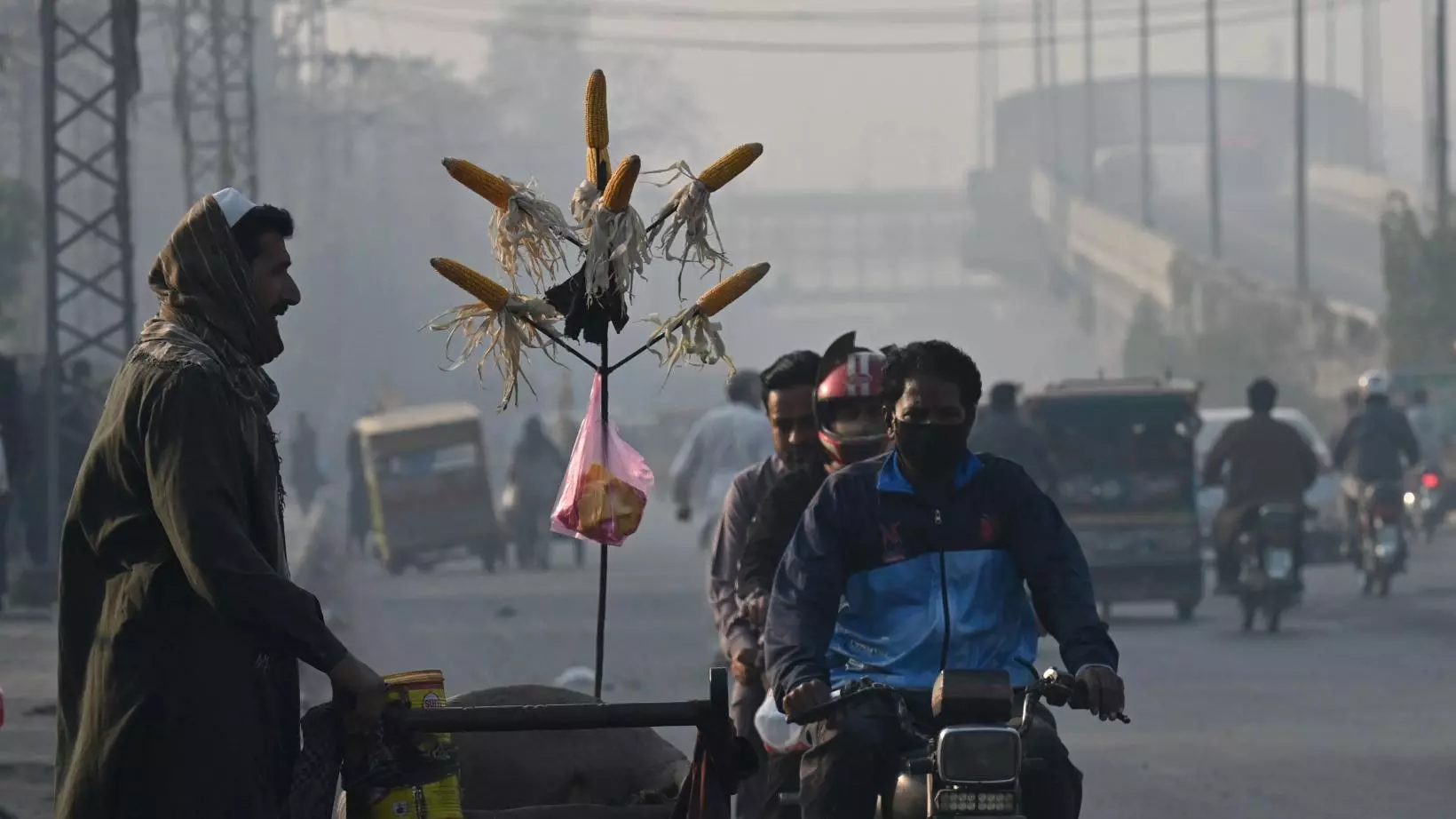
In Pakistan’s cities, it has become normal to talk about coughing in winter, burning eyes during smog season, and a heavy haze that blocks the sun. What is less visible is what this same air may be doing inside the human body, especially inside the bodies of young people who believe heart disease is something far away in the future.
Doctors in major hospitals are now seeing a pattern that is difficult to ignore. Patients in their late twenties, thirties, and early forties are arriving with chest pain, high blood pressure, and in some cases even heart attacks. Many of them do not smoke heavily. Many do not have a strong family history of heart disease. Yet something is weakening their cardiovascular health much earlier than expected.
In conversations with physicians, a quiet concern appears again and again. They are not just treating disease anymore. They are trying to understand what is accelerating it.
One senior cardiologist at a public hospital in Lahore described it in simple words. “We used to think heart disease is a lifestyle problem only. Now we are seeing patients who do not fit the usual profile. They are young, working, and otherwise healthy. Something in their environment is pushing their bodies toward inflammation and stress much earlier than before.” He pauses before adding another observation. “We cannot ignore the air they are breathing every day.”
In Pakistan, cardiovascular disease is already one of the leading causes of death. According to national and international health estimates, heart-related illnesses account for a significant share of adult mortality, with increasing cases reported in urban centers. What has changed in recent years is not just the number of cases, but the age group affected. Hospital records in large cities show a gradual rise in patients under 45 presenting with hypertension and cardiac symptoms. While lifestyle factors like diet, stress, and inactivity remain important, doctors say they no longer explain the full picture.
A medical officer working in a government hospital in Karachi explains it through what he sees in emergency rooms. “We used to expect older patients with blocked arteries. Now we see young office workers and even students coming with chest tightness. Many of them have normal cholesterol. That makes us look deeper into other triggers.”
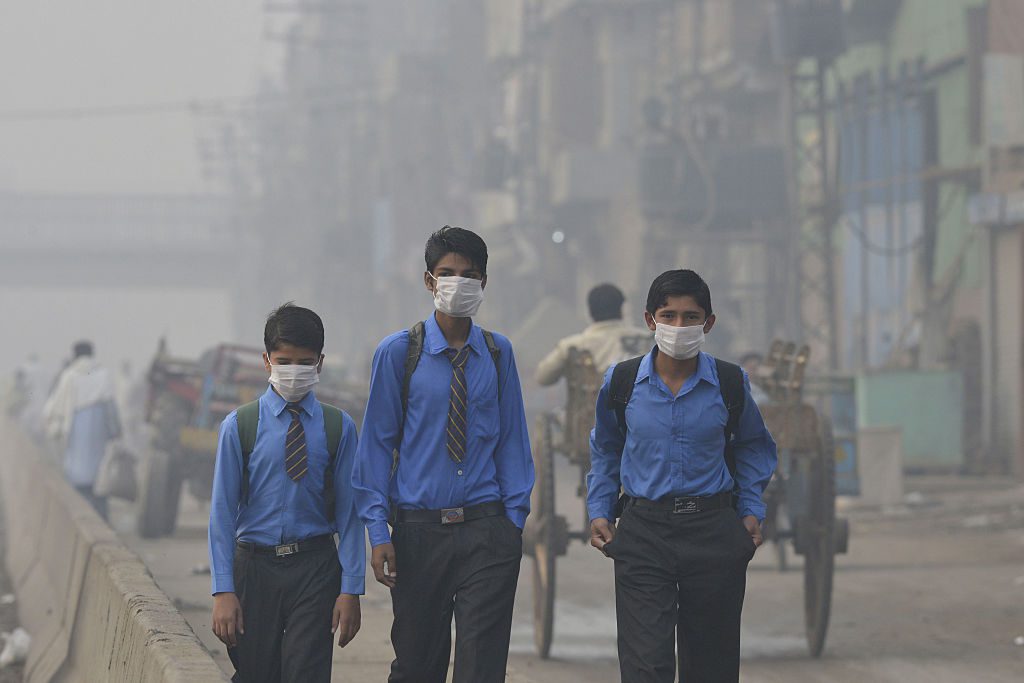
One of those triggers, increasingly discussed in medical research globally, is prolonged exposure to fine particulate matter in the air. These particles are small enough to enter the bloodstream through the lungs, causing inflammation that affects blood vessels and heart function over time.
The World Health Organization recommends an annual average exposure of no more than 5 micrograms per cubic meter for PM2.5. In contrast, urban areas in Pakistan frequently experience levels that exceed 50 to 100 micrograms per cubic meter during peak pollution periods, sometimes even higher in winter months. While these numbers are often discussed in the context of respiratory illness, global medical literature now connects long-term exposure to cardiovascular damage as well. Research published in international cardiology and environmental health journals has found that fine particulate matter contributes to narrowing of blood vessels, increased blood pressure, acceleration of artery blockage, and higher risk of heart attack and stroke. In simpler terms, the same air that irritates the lungs is also quietly stressing the heart.
To understand how this happens, doctors describe a chain reaction inside the body. When polluted air is inhaled, microscopic particles enter deep into the lungs. From there, they can pass into the bloodstream. The body reacts as if it is under attack, triggering inflammation. Over time, this repeated response puts strain on blood vessels and the heart. A pulmonologist based in Islamabad explains it in non-technical language. “It is like the body is always slightly inflamed. Even when the person feels normal, inside the system there is stress. Over months and years, this affects the heart.” This constant internal stress does not always produce immediate symptoms. That is what makes it dangerous. A person can feel fine for years while damage slowly builds up. Doctors say this is one reason why heart problems in younger patients often appear suddenly. The body has already been under pressure long before the first hospital visit.
In a crowded ward of a public hospital in Karachi, a 34-year-old man described his experience of what he thought was simple fatigue. He works as a delivery rider and spends most of his day on the road. He never considered himself unhealthy. But over several months, he began feeling unusual tiredness and occasional chest discomfort. At first, he ignored it. “I thought it was just work pressure. Everyone feels tired in Karachi traffic.” One evening, after returning home, the pain became sharp enough that his family rushed him to the hospital. Doctors diagnosed him with severe hypertension and early signs of cardiac strain. He was surprised. “I don’t smoke much. I am not very old. I did not expect this.” Doctors advised medication, but also asked about his daily environment. His answer was simple: hours spent breathing roadside traffic emissions every day.
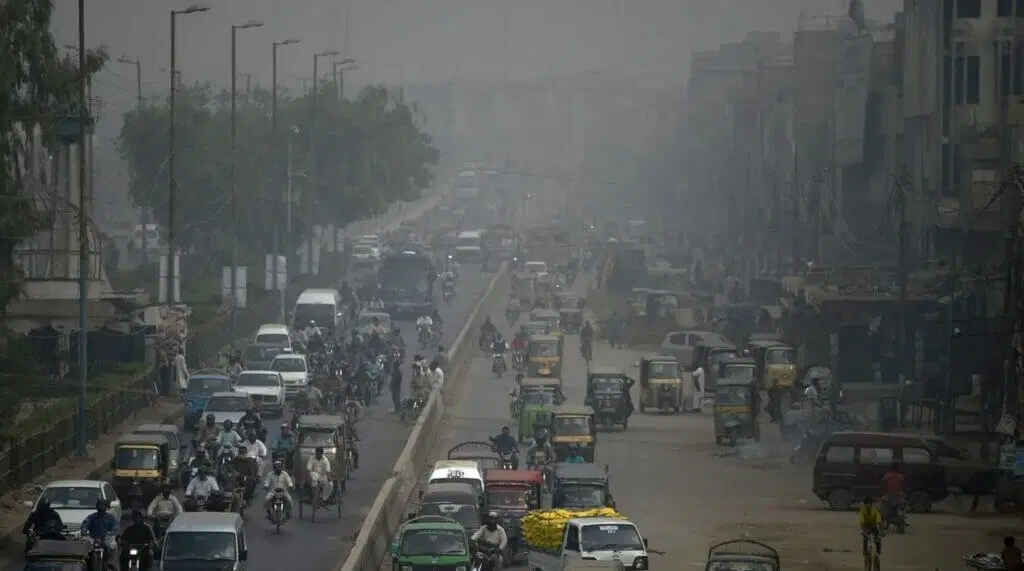
In Pakistan, exposure to harmful air is not limited to industrial zones or specific seasons. For many people, it is a daily reality shaped by commuting, outdoor work, and dense urban traffic. Rickshaw drivers, street vendors, traffic police officers, and delivery workers are among the most exposed groups. They spend long hours in open environments surrounded by vehicle emissions, dust, and roadside burning. A traffic police officer stationed at a busy intersection in Lahore described his routine. “At the end of the day, my throat is always dry. We don’t even think about it anymore. It is part of the job.” What is less discussed is how this long-term exposure accumulates inside the body. While respiratory symptoms are more visible, cardiovascular effects may take years to surface.
One of the surprising findings emerging from global studies is that younger populations in highly polluted environments may face earlier onset of cardiovascular risks than previously assumed. In Pakistan, this concern is amplified by high urban population density, heavy reliance on fossil fuel transport, limited green space in cities, and weak enforcement of emission standards. A public health researcher in Islamabad explained the combined effect. “It is not one factor. It is continuous exposure from multiple sources. People think they are only exposed outside, but even commuting, working, and living in dense areas adds up.” He adds that younger populations may appear healthier on the surface but are still exposed to the same environmental stressors as older groups.
One of the challenges doctors face is that environmental causes are not always considered during routine diagnosis. A general physician in a district hospital in Sindh explained this gap. “We treat the symptoms. If someone has high blood pressure, we give medicine. But we do not always have time to investigate environmental exposure history in detail.” This creates a situation where the underlying cause remains unaddressed at a policy level, even if it is partially managed at the clinical level.
International studies over the past decade have increasingly linked long-term exposure to fine particulate matter with cardiovascular disease. Large-scale research from Europe, the United States, and parts of Asia shows a consistent relationship between polluted air and increased heart risk. However, in Pakistan, this connection is not widely communicated to the public. There are few awareness campaigns that explain how daily breathing conditions affect heart health. Most public messaging focuses on masks during smog season or general warnings about air quality.
Perhaps the most concerning part of this emerging health story is its invisibility. Unlike infectious diseases or sudden outbreaks, cardiovascular damage linked to environmental exposure develops slowly. There are no immediate alarms. No visible signs in early stages. No clear moment when the damage begins. For many young Pakistanis, the first sign may also be the most serious one.
Back in the hospital corridor, the young patient recovering from his episode sits quietly with his family. He asks a question that doctors hear often. “Why did this happen to me so early?” There is no simple answer. His diet, stress, work conditions, and genetics may all play a role. But doctors also know that the environment he lives in is part of the equation.
As Pakistan’s cities continue to grow, traffic increases, and industrial activity expands, the question becomes less about individual cases and more about collective exposure. What is happening to young hearts today may not remain hidden for long. It is already entering emergency rooms, already appearing in prescriptions, already shaping lives in ways that are only beginning to be understood. And it begins, quietly, with every breath taken in a city where the air itself is no longer neutral.
