


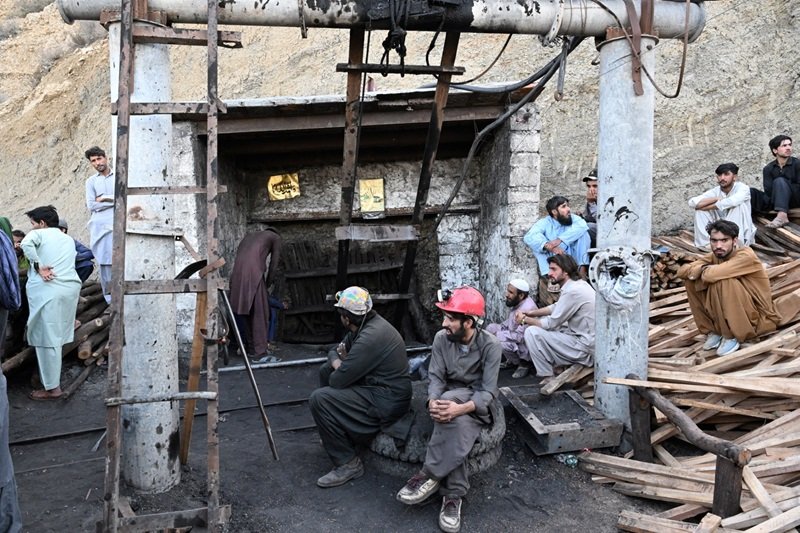
QUETTA: An inquiry into a coal mine disaster that killed 34 miners near Quetta has found that the incident was caused by the illegal use of explosives, while the affected mine also employed workers as young as 16, according to an investigation report.
The disaster occurred on July 30, 2026, in the Sor Range area, approximately 30 kilometres southeast of Quetta. Balochistan Chief Minister Sarfraz Bugti ordered an investigation led by the chairman of the Chief Minister’s Inspection Team, Bashir Ahmed Bangulzai, following the incident.
The inquiry committee examined the site, recorded statements from relevant officials and reviewed available evidence and documents before preparing its report nearly two months after the tragedy.
According to the findings, the explosion occurred at around 2:30pm in Mine No. 1 of the Sardar Muhammad Usman Khan Jogezai Coal Company, approximately 4,180 feet underground.
Mine No. 1 was connected to Mine No. 2 for oxygen supply and ventilation, causing both mines to be affected by the explosion. The report said Mine No. 1 completely collapsed, damaging its entrance and ventilation system.
At the time of the incident, 32 miners were working in the two mines. Only one miner managed to escape alive. Three additional miners later entered the mine to rescue their colleagues and relatives without following safety and rescue protocols. All three died.
Rescue teams recovered all the bodies after nearly three days. Medical examinations found that five miners died from burns, while 29 died from suffocation.
Illegal explosives use identified as the cause
The inquiry report identified the illegal use of explosives inside the mine as the primary cause of the disaster.
Investigators found drilling holes in a hard rock layer located between coal seams measuring seven to eight feet thick. The evidence indicated that blasting had taken place at the coal extraction site, known as the longwall face.
According to the report, blasting generated fine coal dust that may have spread towards the entrance of the mine, contributing to the explosion.
The inquiry cited violations of Rules 97 and 99 of the Coal Mines Regulations, 1926, which govern the use and storage of explosives. Mines Inspectorate officials told Urdu News that the company did not have a licence or a qualified expert to use explosives.
The report further stated that the mine owner, manager and mine sardar knew about the underground blasting but failed to stop it or inform the authorities.
The committee recommended criminal proceedings against the relevant Pakistan Mineral Development Corporation (PMDC) officials and the owners and management of the coal company under the Mines Act, 1923, and the Coal Mines Regulations, 1926.
Inquiry reveals employment of underage miners
The investigation also found that six of the miners killed in the disaster were younger than 18. Two were below the age of 17, including a 16-year-old who was three months past his 16th birthday and another aged 16 years and four months.
The Mines Act, 1923, prohibits employing people under 17 inside mines.
The report also revealed that three brothers and their uncle died in the incident. Six other victims belonged to three additional families.
The committee recommended legislation to prevent brothers and close relatives from working in the same shift, noting that existing law did not prohibit the practice.
It also declared the company’s manager, Akhtar Shahzad, and mine sardar, Muhammad Gulab, unfit for their respective duties, citing concerns about inspection procedures and the recording of safety checks.
Shortage of mine inspectors raises safety concerns
The inquiry highlighted significant staffing shortages in the provincial Mines Inspectorate, raising concerns about the enforcement of safety regulations.
According to the report, Balochistan had 2,935 mines but only 15 inspection officers. In the region where the disaster occurred, 507 mines and approximately 6,000 miners were overseen by one inspector, one junior inspector and one electrical inspector.
The committee said the available workforce was insufficient to ensure that mines received even one repeat inspection each year.
It recommended restructuring the Mines Inspectorate, improving its technical capacity, strengthening controls on the sale and use of explosives, reviewing subcontracting arrangements and accelerating work on the Mines Health and Safety Bill, 2026.
The report also questioned the subcontracting arrangement involving PMDC. Although the area was leased to the state-owned corporation, a company had been allowed to extract coal from 282 acres under a contractor arrangement.
The committee said the contracting system lacked a legal basis and recommended reviewing such arrangements and taking action in accordance with the law.
Previous inspections and workers’ welfare
Separate findings by government departments raised further concerns about mine safety and workers’ welfare.
According to documents cited in the investigation, inspectors had identified shortcomings involving pre-shift inspections, timber supports and coal dust at the affected mines during an inspection on June 10. The company manager subsequently claimed on June 26 that the violations had been addressed.
The disaster occurred 34 days after that claim. However, the Mines Inspectorate maintained that its inspection approximately 50 days before the incident had not identified serious violations in the affected mines.
The provincial Minerals Department suspended three officials, including a mines inspector, over alleged negligence following its separate inquiry.
The Labour Department also reported poor accommodation, a lack of clean drinking water and concerns about workers’ registration with the Employees’ Old-Age Benefits Institution (EOBI). Initially, the company could provide registration records for only 14 of the 34 miners who died.
The department recommended increasing compensation paid by mine owners to the families of deceased workers from Rs500,000 to Rs2 million per worker.
The inquiry into the Quetta coal mine disaster has renewed questions about workplace safety, regulatory oversight and the enforcement of mining laws in Balochistan, where thousands of workers depend on coal mining for their livelihoods.
