


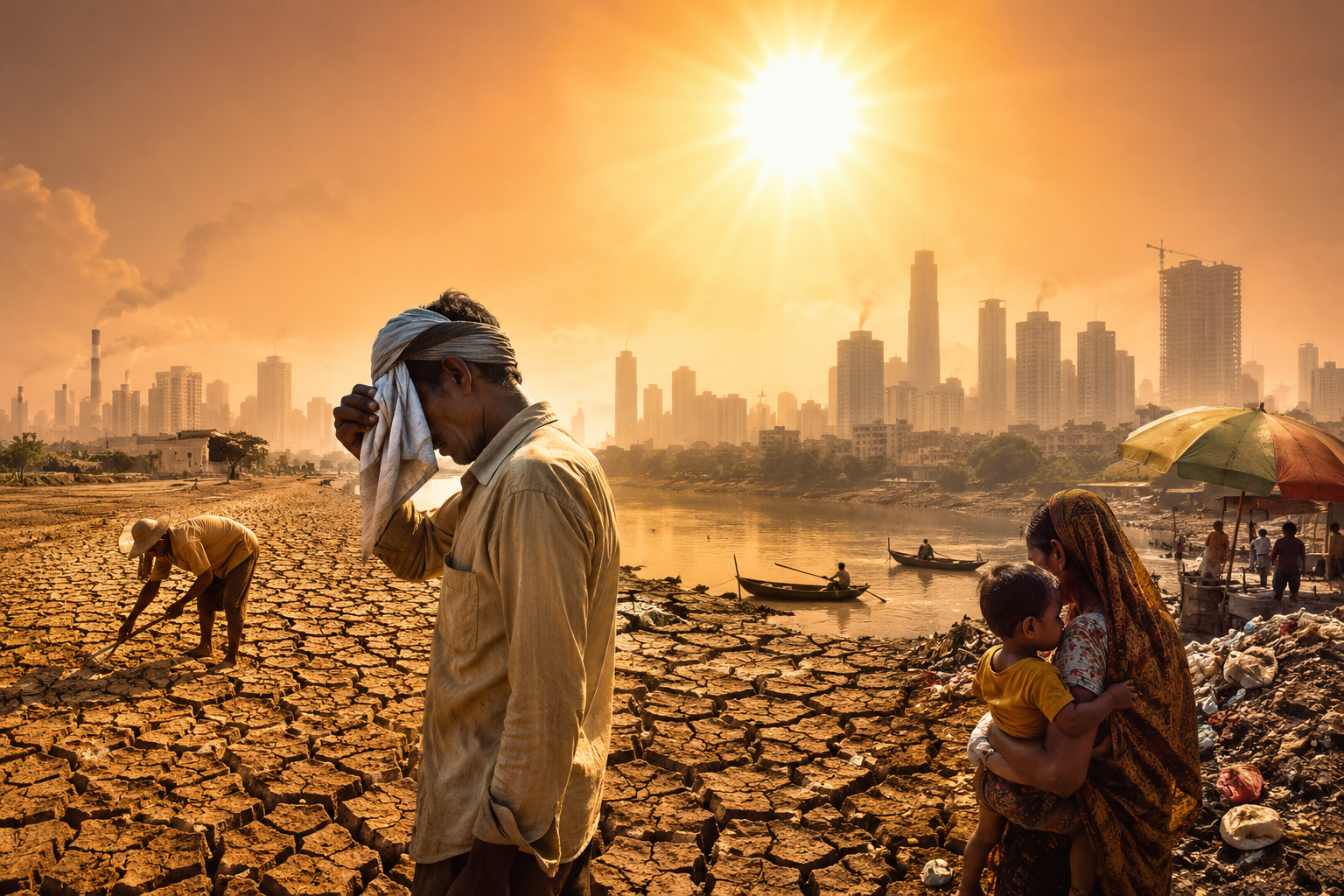
In the summer of 2026, the air across South and Southeast Asia feels different in a way that is hard to ignore, even for those who have lived through decades of seasonal heat. The difference is not only in temperature readings but in how the heat behaves. It arrives earlier, stays longer, and refuses to fully leave even at night.
In parts of Pakistan, India, Bangladesh, Thailand, and Malaysia, meteorological stations have recorded a steady rise in average temperatures over the past two decades. Recent climate summaries show that several major cities are now experiencing multiple days each year above 45°C, a threshold that was once rare but is increasingly becoming part of the seasonal norm.
In Pakistan’s southern and central regions, heatwaves have become more frequent and more intense. What used to be short bursts of extreme temperature now stretch into prolonged periods that strain electricity systems, water supplies, and human endurance. Hospitals report recurring spikes in heat-related illnesses during peak months, especially among outdoor laborers and low-income communities living in dense urban settlements.
In India, similar patterns are visible. Cities like Delhi and Jaipur regularly face extreme heat combined with poor air quality, creating a dangerous mix of high temperature and fine particulate pollution. Health specialists note that this combination increases stress on the heart and lungs, even in people with no prior medical conditions.
Bangladesh is experiencing another layer of vulnerability. In low-lying coastal regions, rising temperatures are interacting with humidity levels that push the “feels-like” temperature far above the actual reading. In such conditions, even basic physical activity can become risky, particularly for workers in agriculture and construction.
Thailand and the Philippines have also reported unusual heat behavior linked with shifting climate systems. In urban centers, heat trapped by concrete and limited green cover creates what scientists describe as urban heat islands, where nighttime temperatures remain dangerously high.
One of the major drivers behind these changes is the warming of the planet itself, but regional climate systems are adding further complexity. El Niño events, which occur when ocean temperatures in the Pacific rise, are known to disrupt global weather patterns. In South and Southeast Asia, these events often intensify dry conditions and increase heat extremes.
The most recent strong El Niño cycle contributed to widespread temperature anomalies across Asia. Rainfall patterns shifted, drought conditions expanded in some areas, and heatwaves became more severe in others. Climate monitoring agencies have noted that in a warming world, El Niño’s effects are becoming harder to predict and more disruptive.
At the same time, air pollution is compounding the crisis. In many cities, high temperatures and polluted air are now occurring together more frequently. Fine particulate matter, known as PM2.5, traps heat and worsens respiratory stress. Studies have shown that exposure to both heat and air pollution significantly increases the risk of hospitalization for asthma, heart disease, and other chronic conditions.
Health experts are increasingly concerned that the true scale of heat-related deaths is not fully visible in official records. Many cases are recorded under other causes such as cardiac arrest or kidney failure, even when extreme heat is a key contributing factor. This undercounting makes it difficult for policymakers to grasp the full severity of the situation.
In rural areas, the impact is just as severe but often less documented. Farmers in arid and semi-arid regions are adjusting their working hours to avoid midday heat, but productivity losses are becoming unavoidable. Water scarcity is worsening in already vulnerable regions such as parts of Balochistan, where rising temperatures increase evaporation and reduce groundwater availability. Tanker-dependent communities face rising costs and uncertain supply.
In cities, the crisis takes a different form. Informal settlements built with metal roofs and limited ventilation turn into heat traps during the day. At night, the heat does not fully escape, forcing families to endure continuous thermal stress without relief. Power outages during peak demand further worsen conditions, leaving cooling systems inaccessible to many.
Climate data from recent years shows a clear trend: extreme heat events are not only increasing in frequency but also in duration and geographic spread. Regions that once experienced occasional heatwaves are now facing them almost annually. In some areas, the season of extreme heat is expanding beyond traditional summer months.
Scientists emphasize that heat is no longer just a weather issue. It is a health risk multiplier. It affects nutrition by reducing labor capacity in agriculture, increases disease vulnerability by weakening the body’s stress response, and deepens inequality by disproportionately impacting those without access to cooling, healthcare, or stable housing.
Despite its growing impact, heat remains one of the least visible climate threats in public discourse. Unlike floods or storms, it does not always leave behind clear destruction. Instead, it accumulates silently, measured in fatigue, dehydration, reduced productivity, and rising hospital admissions.
Urban planners and climate researchers are increasingly calling for a shift in how societies understand and respond to heat. Some cities have begun experimenting with reflective building materials, expanded tree cover, and early warning systems for heatwaves. Others are integrating heat risk into public health planning, treating it with the same urgency as infectious disease outbreaks.
Still, gaps remain large. In many regions, public awareness has not caught up with scientific evidence. Heat is often still perceived as a seasonal discomfort rather than a systemic threat that interacts with air quality, water security, and economic stability.
What is becoming clear, however, is that the future of the region will be shaped not only by rising temperatures but by how societies adapt to them. The challenge is no longer limited to surviving the hottest days of the year. It is about rethinking cities, infrastructure, work patterns, and health systems for a world where extreme heat is becoming a defining feature of everyday life.
