

When war breaks out in a distant region, the first images on our screens are of explosions and battle lines. But alongside the headlines lie economic tremors that spread far beyond the battlefield. The 2026 conflict involving Iran and broader Middle East tensions has rapidly shifted from a geopolitical crisis to a global economic disruption, and for Pakistan, an energy importing, trade dependent economy, the effects have been swift and multifaceted.
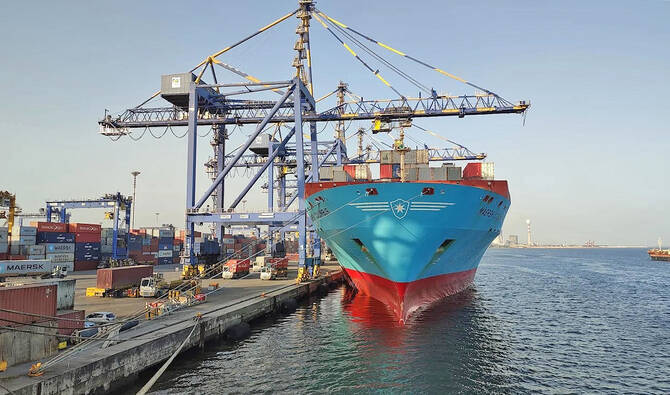
Economic shocks from the conflict have emerged primarily through energy markets and trade routes that Pakistan and its neighbours heavily depend on. The Strait of Hormuz, a narrow waterway through which roughly 20 percent of the world’s oil and LNG shipments pass, has become a flashpoint of risk. Strikes on oil infrastructure and threats to shipping lanes have already pushed up fuel costs globally. This is not an abstract statistic for Pakistan, where around 90 percent of energy needs are met through imports by sea, primarily from Gulf suppliers, it translates into tangible economic strain.
In recent weeks, global Brent crude oil prices have climbed significantly, breaching levels not seen since the pandemic era as traders factor in supply uncertainties. Although prices fluctuate day by day, the fear of sustained disruptions in Hormuz has already driven premiums on crude and refined products. These increases feed directly into Pakistan’s import bill, deepening the already fragile trade balance. Higher global oil prices also ripple through domestic markets, inflating transportation costs, pushing up food prices and adding pressure on already high inflation.
The inflationary effects are already visible in everyday life. Many households are reporting steeper costs for petrol, diesel and cooking fuels, while transport fares and food prices have seen upticks as businesses adjust to elevated energy costs. Spending on energy compounds the pressure on household budgets at a time when incomes are already strained by slower growth and weak job creation. This strain is reflected in broader macroeconomic indicators, with economists warning that prolonged energy price shocks could push inflation even higher and complicate Pakistan’s fiscal situation.
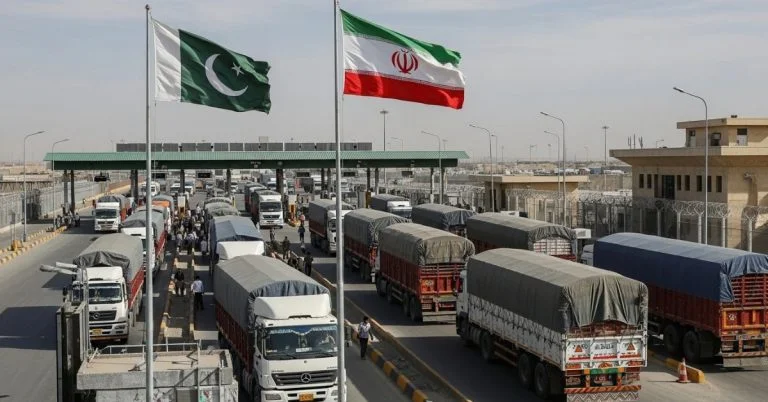
Trade, too, is under pressure. Pakistan’s formal trade with Iran has historically been modest, influenced by sanctions, banking restrictions and informal cross-border exchanges. While exact figures vary year by year, bilateral trade has struggled to break out of the low billions, with Pakistan’s exports small compared to imports of mineral fuels and industrial goods from Iran. Recent scholarly analysis underscores that economic relations between the two neighbours have been constrained by long-standing financial, regulatory and geopolitical barriers.
However, the region’s interconnected supply chains mean that disruptions in one country can affect neighbouring economies indirectly. Even as Afghanistan-Iran trade reportedly continues robustly, with cross-border freight and cargo movement remaining active, Pakistani traders and logistics firms are finding themselves squeezed by higher insurance costs, shipping premiums and logistical delays that accompany instability in the Gulf.
This dynamic has also prompted government and industry warnings in Pakistan about the broader fallout. Key commerce bodies have called for contingency planning to cushion the economy against prolonged disruption to energy flows and supply chains. Analysts have highlighted risks to the balance of payments if imports become more expensive while export earnings stagnate. Some have also pointed out potential risks to remittance flows from Pakistani workers in Gulf states if labour markets there slow under economic stress, though these effects are still emerging.
The government’s response has been a mix of short-term energy security measures and broader economic adjustments. Islamabad has moved to protect key shipping lanes and ensure the continuity of oil imports, even as authorities signal a willingness to facilitate dialogue to de-escalate the conflict. This includes diplomatic overtures aimed at reducing regional tensions and stabilising supply routes, an acknowledgment that economic resilience depends not just on markets, but on geopolitical outcomes.
Despite these efforts, the conflict’s economic spillovers have already reshaped Pakistan’s financial landscape. Austerity measures, such as energy conservation policies and careful management of foreign exchange reserves, have been introduced to preserve macroeconomic stability. Bankers and economists are paying particular attention to liquidity conditions and credit flows, aware that sustained stress could trigger tighter finance conditions that would slow investment and development spending.
Beyond energy and official trade, the informal economy and border communities are feeling the shock as well. Higher import costs and tighter supply lines have raised prices for goods in markets along the Pakistan-Iran border. Traders report that smuggling dynamics and informal pricing are shifting in response to changes in the Iranian currency and fuel prices, though such effects are hard to quantify and vary widely across regions.
Looking ahead, the duration and intensity of the Iran conflict will be the key variable shaping the economic narrative. A short-lived conflict might lead to temporary disruptions followed by market corrections. But a protracted confrontation threatens to embed high energy costs into inflation expectations, slow global trade and nudge Pakistan’s already fragile economy toward deeper stress. Global institutions are warning that prolonged shocks in energy prices could slow overall trade growth and create broader budgetary pressures worldwide.
For Pakistan, the implications extend beyond immediate price tags and import figures. The crisis underscores the structural challenges the economy faces: heavy dependence on imported energy, a narrow export base, and limited shock absorbers in the financial system. Weathering this storm will require both careful crisis management in the short run and long-term reforms aimed at diversifying energy sources, broadening trade ties, and strengthening internal production capacities.
Finally, the broader human economy, the livelihoods of ordinary families and small businesses, is where these macroeconomic movements are most keenly felt. Price pressures on essential goods, uncertainty in business planning, and tighter government budgets translate into harder choices for households already juggling everyday costs. In this respect, the Iran conflict’s economic impact is not just about abstract numbers and global markets, it is about real people navigating rising costs and shrinking economic space.
