


Drug addiction continues to pose one of the most serious social and public health challenges in Pakistan, with young people increasingly falling victim to narcotics. Various studies and official estimates indicate that millions of Pakistanis use drugs, while a significant proportion of addicts are under the age of 25. In Balochistan, concerns about substance abuse have grown steadily in recent years, with lawmakers and social activists repeatedly warning about the spread of narcotics among the province’s youth.
Young people, particularly those between the ages of 17 and 20, remain among the most vulnerable groups. Limited employment opportunities, economic uncertainty, and social pressures often contribute to frustration and hopelessness, creating conditions in which drug abuse can flourish. Community leaders and health experts have frequently stressed that addiction is not only a law-enforcement issue but also a social and economic challenge that requires long-term solutions.
Among the substances causing the greatest concern is crystal methamphetamine, commonly known as “Ice.” Unlike many traditional narcotics, Ice is a highly addictive synthetic stimulant that can rapidly damage both physical and mental health. Medical experts warn that prolonged use may lead to severe dental problems, drastic weight loss, cardiovascular complications, anxiety, paranoia, hallucinations, and lasting neurological damage. Its impact extends beyond individual users, often affecting families and communities through rising social instability and crime.
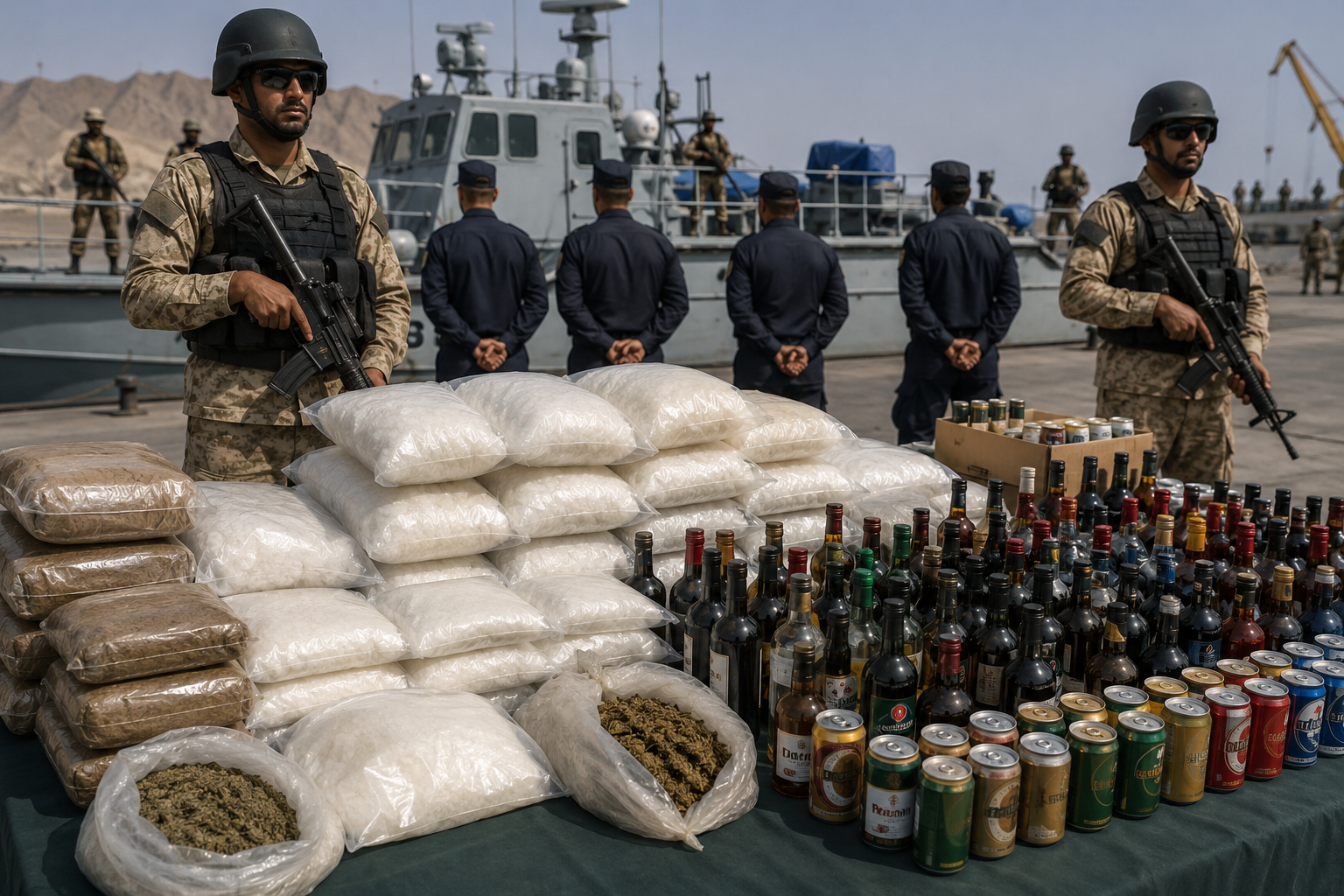
Against this backdrop, a major anti-narcotics operation recently carried out in Gadani has drawn nationwide attention. In a joint action conducted by the Pakistan Navy and the Excise, Taxation and Anti-Narcotics Department, authorities intercepted a large smuggling network allegedly using maritime routes for illegal trafficking.
According to officials, the operation resulted in the seizure of 425 kilograms of Ice, 20 kilograms of hashish, and nearly 10,000 bottles and cans of foreign liquor and beer. Authorities estimate the value of the confiscated liquor at approximately Rs350 million, while the total international market value of the seized consignment is believed to exceed Rs31 billion.
Officials stated that the smugglers were attempting to transport narcotics through international sea routes while bringing foreign liquor into Pakistan. The successful interception prevented a significant quantity of illegal substances from reaching domestic and international markets.
The operation is being described as one of the largest anti-narcotics actions in Balochistan’s history. It also reflects the growing emphasis being placed on disrupting organized smuggling networks operating along the province’s coastline. Law-enforcement agencies have intensified efforts in recent months, resulting in the recovery of substantial quantities of narcotics and other contraband.
While the seizure represents a major achievement, it also highlights the scale of the challenge facing authorities. Drug trafficking remains a highly profitable criminal enterprise, and the quantities recovered suggest that extensive networks continue to operate across regional and international routes.
Addressing the problem requires more than successful raids and seizures. Experts argue that stronger border controls, intelligence-led operations, rehabilitation programs, public awareness campaigns, and greater employment opportunities for young people are all essential components of an effective anti-drug strategy.
The Gadani operation stands as an important victory in the fight against narcotics, but it also serves as a reminder that sustained efforts will be needed to protect future generations from the devastating consequences of addiction. Combating drug abuse and trafficking will require cooperation between government institutions, law-enforcement agencies, civil society, and local communities to ensure that young people are offered opportunities and hope instead of falling prey to narcotics.
