


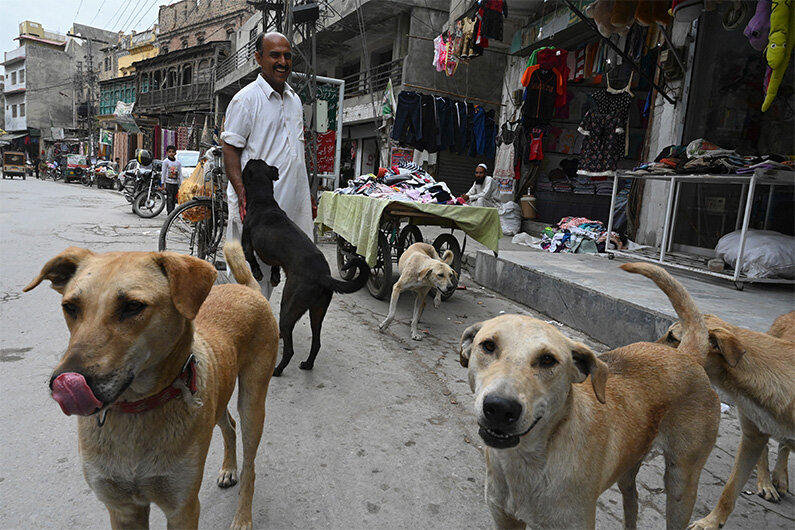
The Balochistan government has directed the Quetta Municipal Administration to immediately stop the killing of stray dogs and cats and to replace outdated and ineffective practices with international-standard TNVR (Trap–Neuter–Vaccinate–Return) procedures to address the issue of stray animals in the provincial capital.
According to official sources, the provincial government has emphasized that the problem of stray animals cannot be resolved through culling and that modern, scientific, and humane methods must be adopted to ensure both public safety and animal welfare. The directive also calls for an end to the use of substandard or fake vaccines, instructing municipal authorities to strictly administer approved, internationally recognized vaccines under proper veterinary supervision.
The initiative is being implemented in collaboration with “Panah Quetta,” an animal welfare organization actively working to ensure the safe handling, vaccination, and population control of stray dogs and cats in different areas of the city. Officials stated that the ongoing TNVR process aims to control the stray population without harming animals, while also reducing health risks associated with rabies and other diseases.
Chief Minister Mir Sarfaraz Bugti said that the solution to the stray animal issue lies in humane and sustainable policies, not in killing. He stressed that animal protection is now an integral part of the provincial government’s broader public welfare agenda.
“The problem of stray animals cannot be solved through violence. A modern, scientific, and humane approach is the only sustainable solution,” the chief minister said. He added that the government is working to ensure that animal protection policies are implemented effectively and on a permanent basis, rather than through temporary or reactionary measures.
The chief minister also appealed to the public to cooperate with government initiatives aimed at protecting animals, stating that public awareness and community support are essential for the success of TNVR programs. He urged citizens to report cases of cruelty against animals and to support vaccination and sterilization efforts in their neighborhoods.
Highlighting the broader vision behind the policy, Mir Sarfaraz Bugti said that Balochistan is gradually becoming a safer province not only for humans but for animals as well. He reiterated the government’s commitment to aligning provincial policies with international animal welfare standards, ensuring coexistence between humans and animals in urban areas.
Officials said monitoring mechanisms are being strengthened to ensure compliance by municipal authorities and to prevent the misuse of funds allocated for animal welfare programs.
