


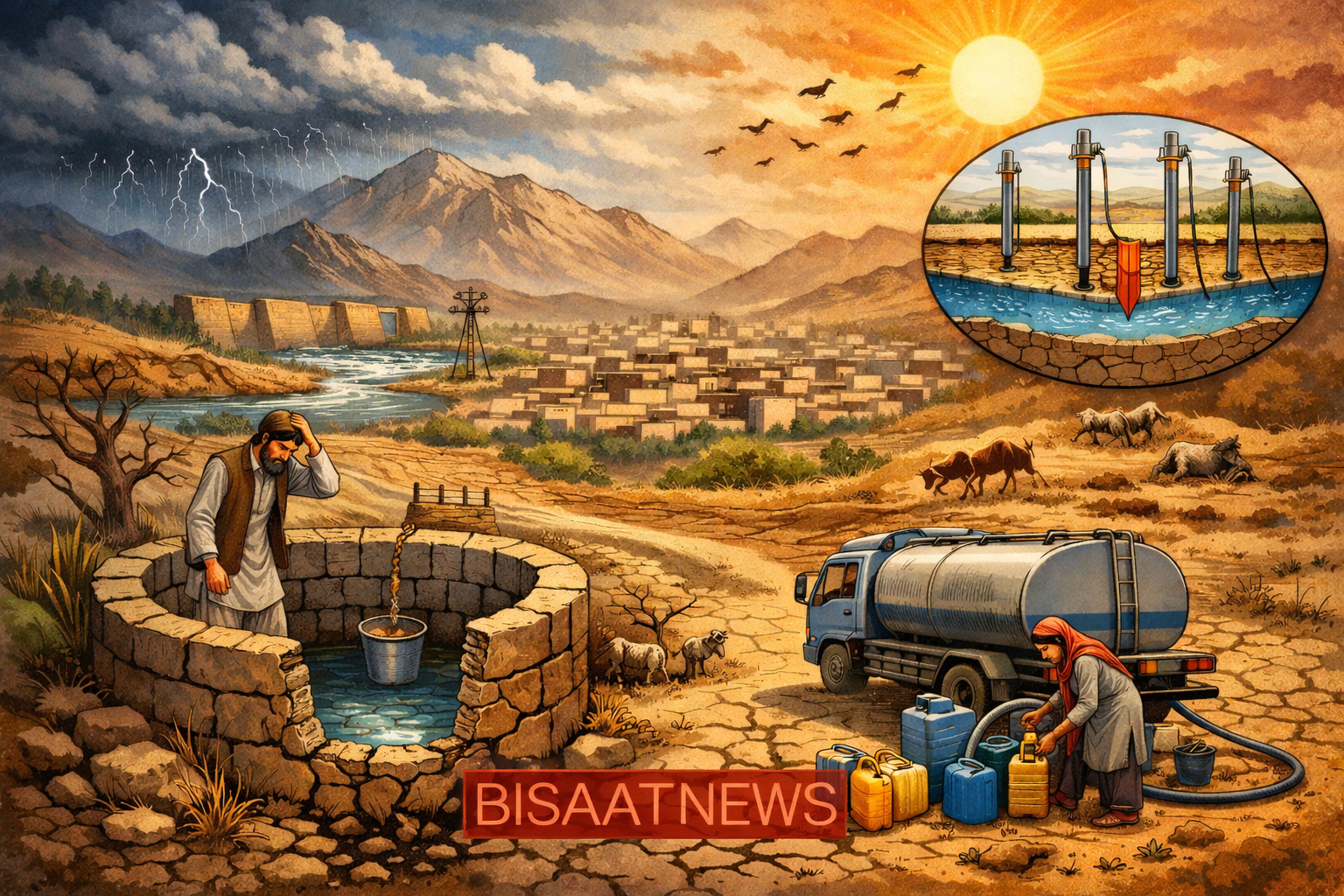
Once known for its natural springs, green valleys, and pleasant climate, Quetta is now facing a silent but extremely dangerous water crisis. Changing climatic patterns, unplanned urban expansion, and unsustainable water use have pushed the provincial capital toward acute water scarcity. This crisis is not limited to Quetta alone; it reflects a broader environmental emergency unfolding across Balochistan as climate change and prolonged drought take an increasingly heavy toll.
According to official figures, Quetta’s population is estimated at between 3 and 3.5 million. In reality, the number is likely far higher. Every day, thousands of people travel to the city from other districts for work, education, business, and medical treatment. While these daily commuters are not counted in census data, they exert constant pressure on the city’s already fragile resources, particularly water. As a result, Quetta’s limited water reserves are depleting at an alarming pace.
Over the past two decades, groundwater levels in Quetta have fallen to critically low levels. Dr. Sanaullah Panizai, Associate Professor at the Department of Geography and Indigenous Planning, University of Balochistan, attributes this situation to what experts call a “negative water balance.” Simply put, far more water is being extracted from the ground than is naturally replenished.
Quetta receives an average annual rainfall of around 244 millimeters, a figure comparable to arid and semi-desert regions globally. Such low rainfall severely limits natural groundwater recharge. At the same time, rapid population growth has driven water demand steadily upward, widening the gap between extraction and replenishment.
The city’s residents rely almost entirely on underground aquifers. Hundreds of tube wells operate daily, drilling deep into the earth to meet domestic needs. However, rainfall and snowfall, the primary sources of recharge are insufficient. Experts estimate that nearly two-thirds of the water being consumed is not replaced, while only about one-third makes its way back into the ground. This imbalance continues to push groundwater levels lower each year.
In many areas of Quetta, the situation has become dire. Residents are forced to purchase expensive water tankers from distant locations. Older tube wells have dried up completely, while new ones are being drilled hundreds of feet deeper, dramatically increasing extraction costs. The burden falls most heavily on low- and middle-income households, for whom access to clean drinking water is increasingly out of reach.
This unfolding crisis extends far beyond the provincial capital. Balochistan is among the regions in Pakistan most severely affected by climate change. In several parts of the province, annual rainfall has been recorded at less than 22 millimeters, an unmistakable indicator of extreme drought. In the Pashtun belt, districts such as Chaman, Pishin, and Loralai face acute water shortages, while in the Baloch belt, areas including Noshki, Kharan, and Panjgur are struggling with similar conditions.
In districts like Noshki, access to safe drinking water has become a serious humanitarian concern, with residents traveling long distances to fetch water. Comparable conditions prevail in many rural areas of Kharan and Panjgur, where water scarcity has reshaped daily life.
In response, the Balochistan government has initiated several measures. These include the construction of delay-action dams, recharge dams, and efforts to improve water governance. A comprehensive action plan recently proposed by the Quetta commissioner emphasizes the more efficient use and conservation of approximately 8.1 million gallons of water per day.
Experts suggest that relatively low-contaminated water used daily in thousands of mosques across Quetta could, after basic treatment, be redirected into recharge wells to help restore groundwater levels. Establishing urban recharge zones to capture and store rainwater could also prevent precious water from being wasted.
Additionally, the provincial government has invested in projects such as the Sabzal Water Treatment Plant, which treats around 2.4 million gallons of water daily. Specialists argue that this treated water should be used for construction, urban agriculture, and tree plantation, thereby conserving valuable groundwater reserves for drinking purposes.
Environmental experts warn that without immediate and effective intervention, Quetta and many other parts of Balochistan could face a severe water emergency in the coming years. Sustainable water use, modern management practices, the development of recharge zones, and strong public awareness are essential to averting disaster.
Quetta’s thirst is not only for water, it is for timely decisions, effective policies, and collective responsibility. Without serious action today, future generations may inherit a Balochistan defined by chronic water scarcity and environmental decline.
