


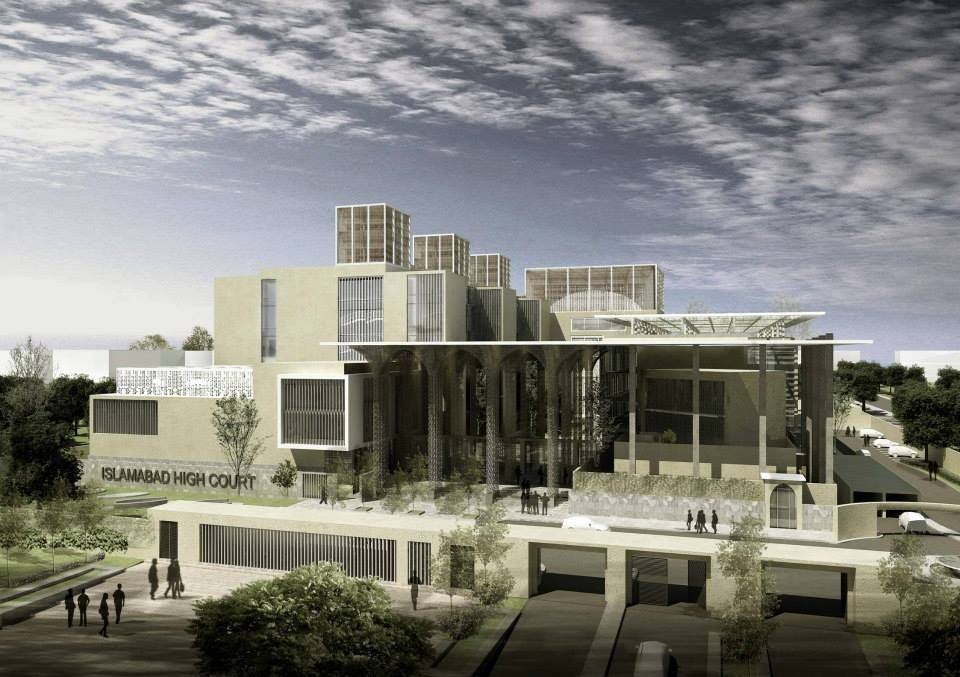
Islamabad: The Islamabad High Court (IHC) has achieved landmark success during the judicial year 2025–26 by implementing wide-ranging reforms in line with directives of the National Judicial Policy Making Committee (NJPMC). According to its annual report, the court made significant progress in expeditious justice, effective case management, and the use of modern technology—particularly in tax, revenue, bail, and criminal matters—while substantially reducing the backlog of pending cases and strengthening public confidence in the judiciary.
Special Benches for Tax and Revenue Cases
On the directions of the Chief Justice of the Islamabad High Court, special division benches were constituted to ensure swift disposal of tax and revenue cases. These benches decided 788 tax-related cases involving more than Rs 506.13 billion, an amount that had remained entangled in prolonged litigation for years.
The performance of the special benches was as follows:
Justice Babar Sattar & Justice Sardar Ejaz Ishaq Khan: 306 cases, Rs 16 billion
Justice Babar Sattar & Justice Saman Rafat Imtiaz: 304 cases, Rs 33 billion
Justice Muhammad Azam Khan & Justice Inam Amin Minhas: 178 cases, Rs 456 billion
These decisions resulted in immediate financial benefit to the national treasury and set a new benchmark for judicial efficiency.
Effective Use of Technology
The IHC significantly enhanced the use of technology by introducing electronic service of notices through WhatsApp, email, and other digital platforms. Dedicated focal persons were appointed in revenue departments, which accelerated proceedings and minimized unnecessary adjournments.
Swift Disposal of Bail Cases
To ensure prompt relief in bail matters, a special police cell was established within the High Court. As a result, more than 3,000 bail applications were decided within a year.
Additionally, formal Standard Operating Procedures (SOPs) for video-link hearings were approved, facilitating the appearance of under-trial prisoners, government witnesses, and officials, and further streamlining judicial proceedings.
Judge-Wise Performance
Between April 1, 2025, and February 4, 2026, IHC judges disposed of thousands of cases. Justice Inam Amin Minhas decided 2,176 cases, Justice Muhammad Azam Khan 1,977 cases, and Justice Muhammad Asif 1,495 cases, reflecting exceptional judicial productivity.
Historic Confirmation of Judges
For the first time in the history of the Islamabad High Court, all additional judges were confirmed as permanent judges simultaneously without any extension. The confirmation of Justice Muhammad Azam Khan, Justice Muhammad Asif, and Justice Inam Amin Minhas is being hailed as a major milestone in the court’s judicial history.
Institutional Reforms
In 2025, the court approved several key reforms, including Practice and Procedure Rules, High Court Establishment Rules, Video-Link SOPs, e-filing for overseas Pakistanis, digitization of the copy branch, and new leave rules. These measures have made the judicial system more organized, transparent, and accessible.
Welfare of Court Employees
The IHC also focused on employee welfare by granting honorariums twice during the year, completing long-pending promotion processes, resolving delayed inquiries, and addressing pension-related issues.
The annual report of the Islamabad High Court highlights how timely decisions, modern technology, and effective administrative reforms can transform the justice system into one that is transparent, people-friendly, and efficient. The court’s performance during 2025–26 stands as a shining chapter in Pakistan’s judicial history.
