


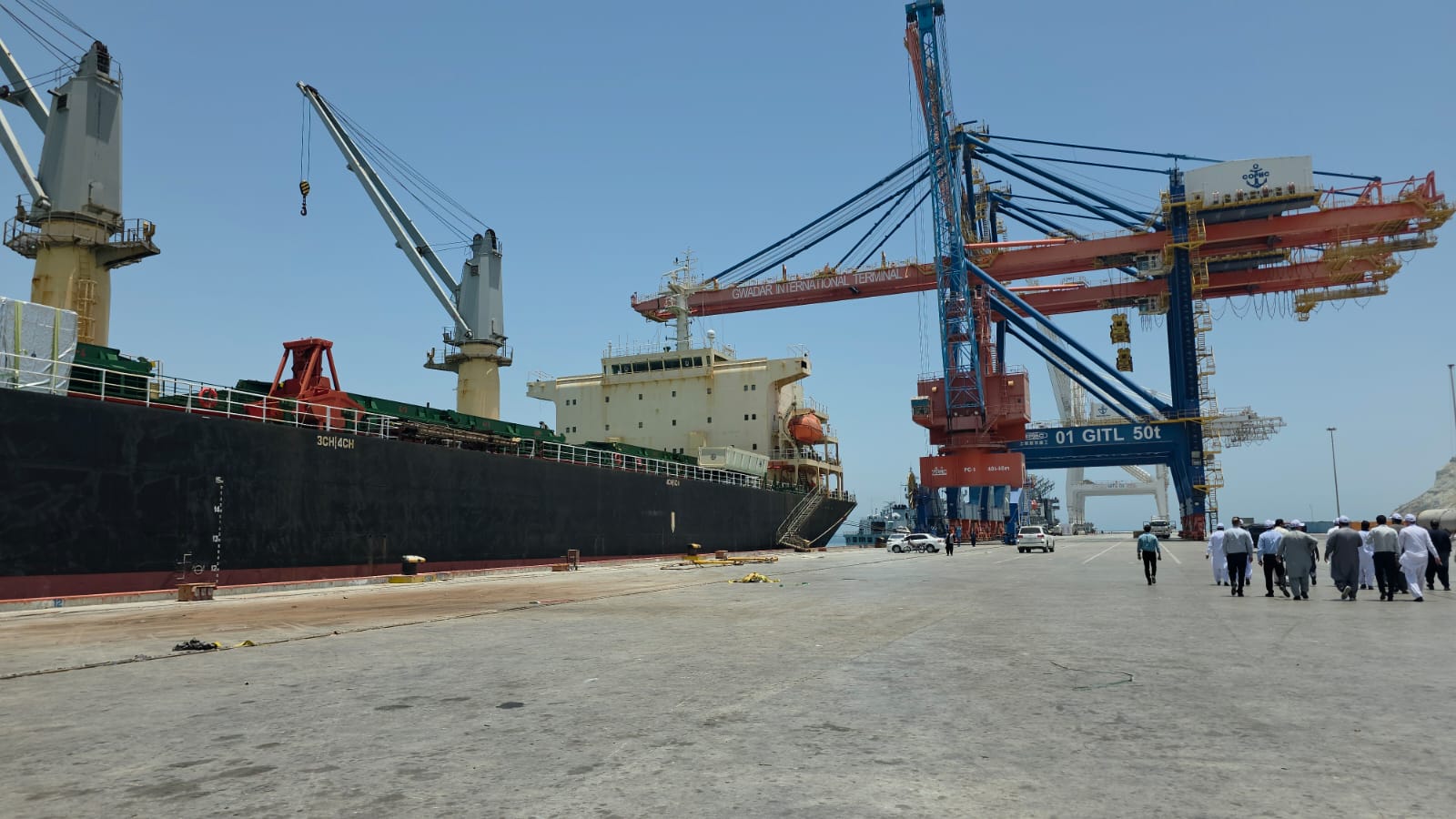
Pakistan has intensified efforts to position Gwadar Port as a competitive regional trade and transshipment hub by introducing major reductions in port charges and enhanced facilitation measures aimed at attracting global shipping lines and increasing cargo movement.
Officials say the policy shift is designed to make Gwadar more cost-competitive in the global maritime market, where ports increasingly compete on pricing, efficiency, and connectivity amid shifting supply chains, geopolitical uncertainty, and evolving trade routes.
Under the latest incentives announced by the Ministry of Maritime Affairs, berthing charges for container vessels have been reduced by 25 percent, international transshipment cargo charges cut by up to 40 percent, and transit container cargo fees lowered by as much as 31 percent. Authorities have also introduced a one-month free storage facility for general cargo, significantly higher than the standard five-day facility offered at other national ports.
Federal Minister for Maritime Affairs Junaid Anwar Chaudhry said these measures are part of a broader strategy to strengthen Pakistan’s maritime economy and integrate Gwadar into global trade networks. He said the reforms are aimed at improving competitiveness and attracting shipping companies seeking alternative and cost-effective routes in the region.
Chairman Gwadar Port Authority Noorul Haq Baloch said the impact of these reforms is already visible, with a noticeable increase in shipping activity at the port. He said Gwadar’s growing attractiveness is linked to “reduced tariffs, improved facilitation, and better marketing by the Gwadar Port Authority,” which are collectively helping to reposition the port in regional shipping dynamics.
Baloch clarified that despite speculation, no Qatari LNG vessel is expected to arrive at Gwadar, adding that the port currently does not have the required infrastructure to handle LNG shipments. However, he emphasized that overall operational activity at the port has improved significantly.
He noted that since the beginning of April, at least six vessels have docked at Gwadar Port, compared to much lower activity in the past when ship arrivals were minimal. He said this increase reflects growing operational stability and rising confidence among shipping operators.
The recent arrival of the transshipment vessel MV YUAN HANG WEI YE, carrying cargo destined for Abu Dhabi and Kuwait, further highlighted Gwadar’s expanding role in regional trade flows and transshipment operations.
Experts say Pakistan’s strategy reflects a broader global trend, where emerging ports are using tariff incentives and policy reforms to attract transshipment and logistics business traditionally concentrated in established hubs such as Dubai, Singapore, and Colombo.
Gwadar’s strategic location near key maritime routes linking the Middle East, Central Asia, and South Asia continues to be highlighted as a long-term advantage. However, analysts note that sustained growth will depend on continued infrastructure development, reliable service delivery, and improved hinterland connectivity.
Officials remain optimistic that with ongoing reforms and increasing vessel traffic, Gwadar Port can strengthen its position as a key gateway in the evolving regional and global trade
