

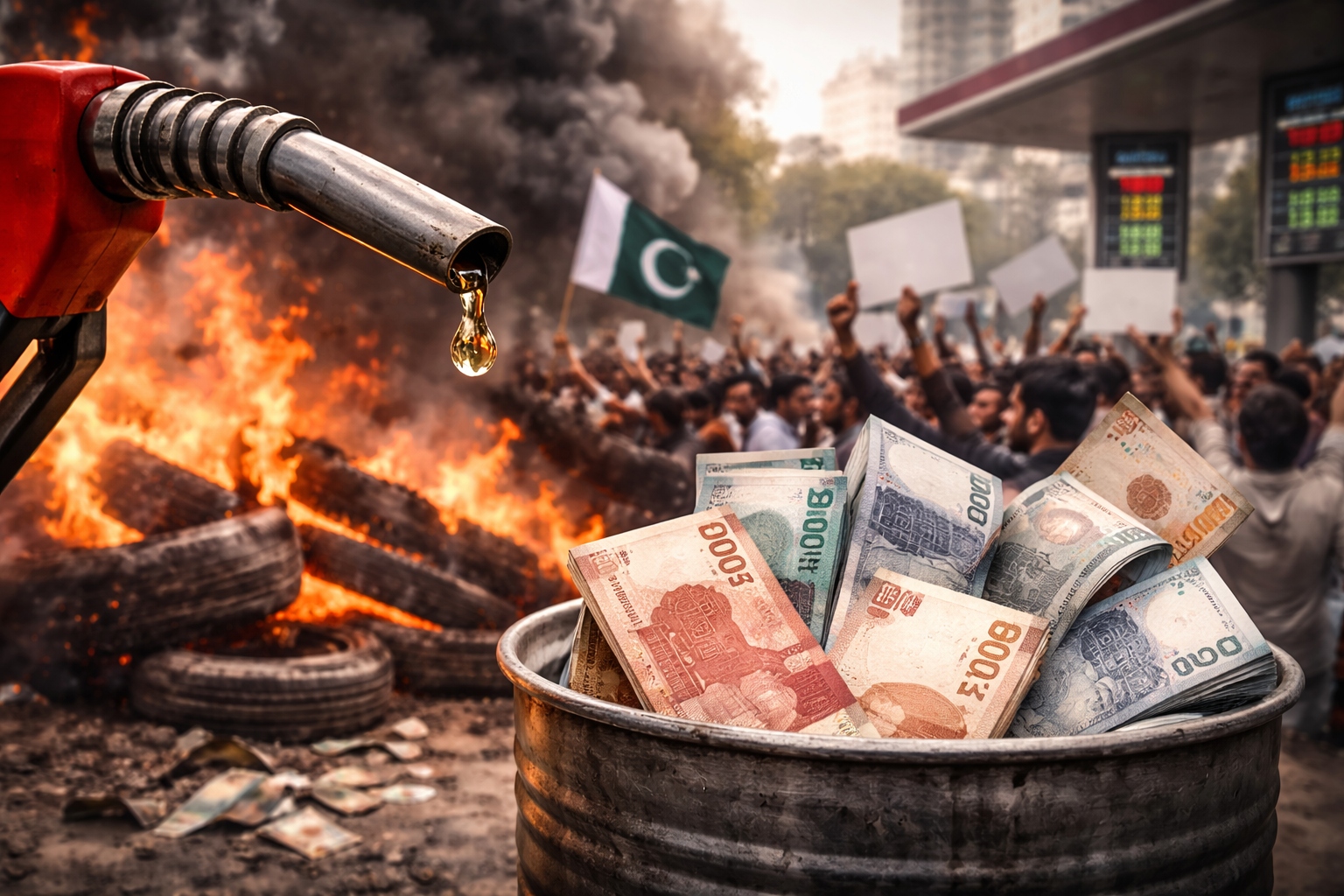
Former Vice Chairman and current member of the Balochistan Bar Council, Advocate Rahib Khan Buledi, has sharply criticized the federal government for the recent and steep increase in petroleum product prices. In a strongly worded statement, he described the hike as a direct economic attack on an already burdened population and rejected the decision outright.
Advocate Rahib Buledi said that inflation has pushed citizens to the brink, and imposing yet another petrol bomb reflects the government’s lack of empathy and its continued reliance on anti-people economic strategies. He said the recent price increase is not just a financial adjustment but part of a broader “anti-poor economic agenda designed to exploit rather than support the masses.”
Addressing the global situation, he acknowledged that tensions between Iran and the United States have created volatility in international markets, but insisted that the unprecedented fuel price surge in Pakistan is a glaring example of governmental incompetence and misguided policymaking. “Global events may have an impact,” he said, “but the level of increase imposed here is unjustifiable and reflects the government’s failure to protect its own citizens.”
Advocate Buledi warned that the consequences of this price hike will ripple across Pakistan’s entire economy. He noted that transport fares are likely to rise sharply, placing an additional burden on working-class families. He added that the cost of essential food items and daily necessities will escalate rapidly, making life even more unaffordable for the common man.
He urged the government to immediately cut extravagant and unnecessary expenditures instead of shifting the weight of economic mismanagement onto the public. He stressed that meaningful reforms, financial discipline, and people-centric decisions are urgently needed to ease the growing economic pressure on Pakistanis.
Advocate Buledi called on authorities to reverse the recent price hike and adopt practical measures that genuinely support citizens rather than further weakening their purchasing power.
